The Forbidden City (Gabriele Mainetti, 2025) and Bushido (Shiraishi Kazuya, 2024)
Two films newly released in the US with different approaches to mixing high and low genre elements.
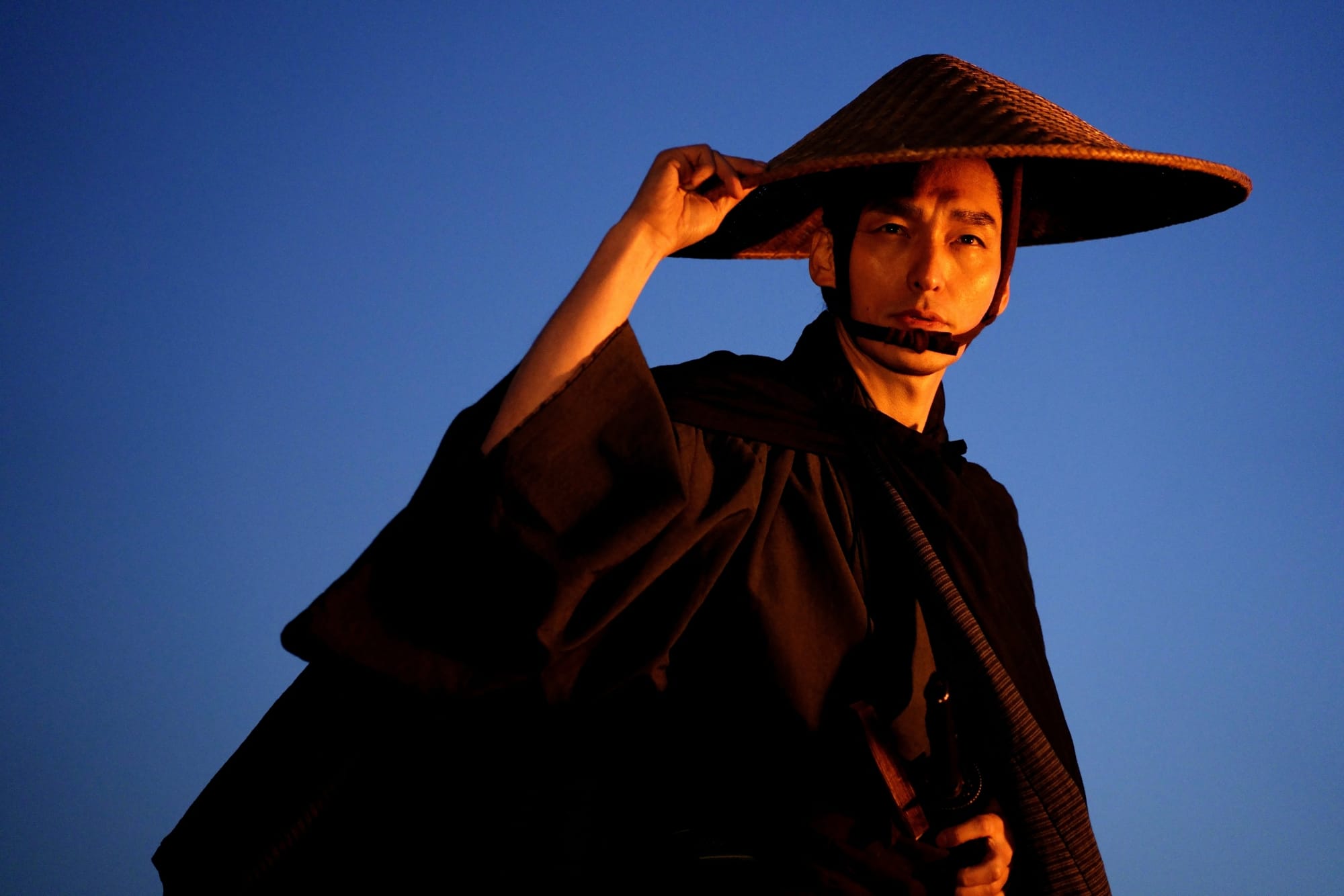
It is the avowed stance of this publication that there is no necessary qualitative difference between so-called genre films and so-called art films. Indeed, I’ve often described my critical approach as “writing about art films like they were genre films and genre films like they were art films”. This approach is an offshoot of Andrew Sarris’s auteurism, where the artistry in a film could often be found in the tension between the film itself and the genre it belonged to: the way a work deviates from the norm is an expression of the artistic personality of its creator. Thus I’m able to use the same critical language to write about the most refined Hou Hsiao-hsien films as I am the most crude Wong Jing joints. Manny Farber’s oft-quoted distinction between termite art and white elephant art is somewhat related, in that Farber sought to find art where it lived, the B movies of the 40s and 50s while calling out the pretensions and phoniness of the classier A pictures. The A/B distinction was one of production value, not genre (noirs and westerns were plentiful in both areas, for example), a system that has returned in the 21st century where genre films (in the form of sci-fi, superhero, fantasy, disaster, and/or action-adventure) have occupied the highest levels of production cost in Hollywood (and China and India, for that matter), though only with rare exceptions the level of studio era A picture prestige. These distinctions grow increasingly blurry, however, as filmmakers, well-aware of the critical history, shuffle themselves between big and small projects, high and low genres, and often even mix elements of the two together in new and unpredictable ways. What do we make of films Like Bushido and The Forbidden City, movies that have many of the pleasures of genre films, encased in the style of art house fare. I guess we see what we want to see and disregard the rest.
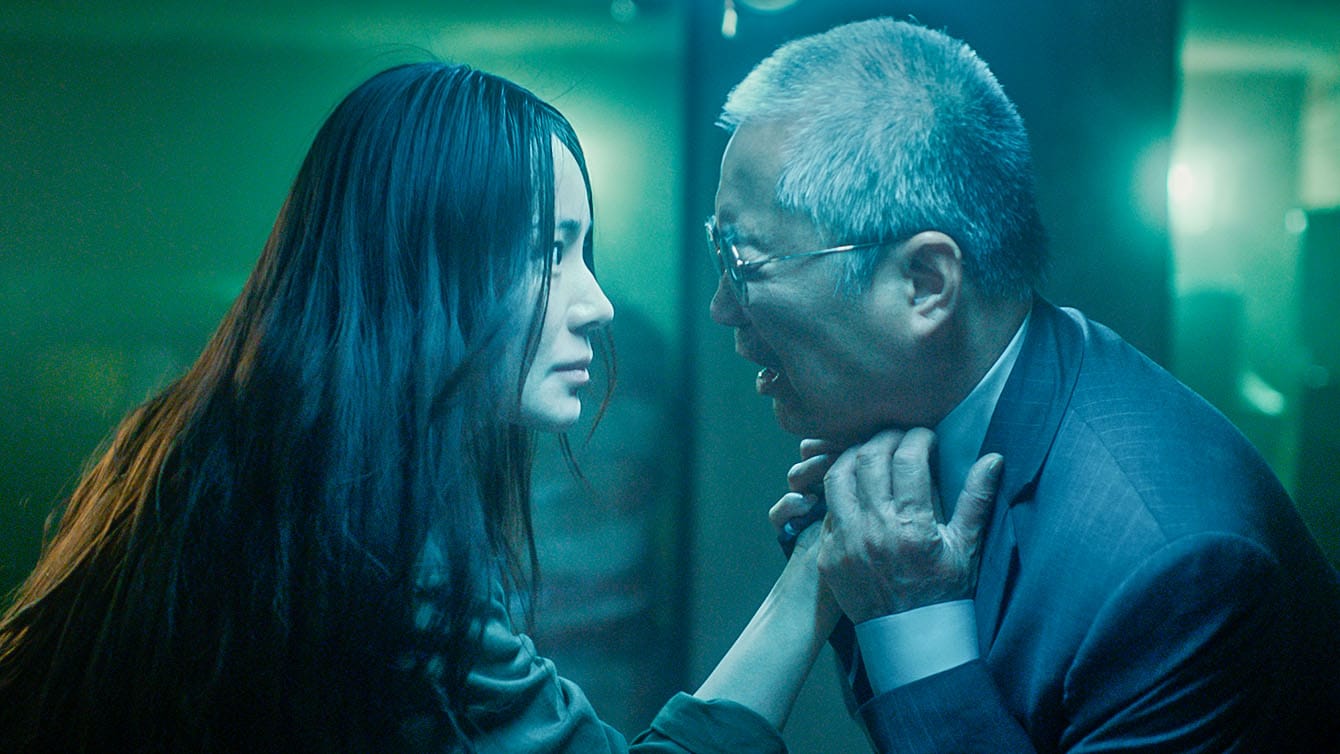
The Forbidden City presents a clearer example of this dilemma, as it really does seem to be two movies smushed together. The one is a family drama about a restaurant owner who goes missing and how his wife and adult son deal with the ramifications of his disappearance, uncovering both infidelity and deeper connections to the local mob(s) than they understood. This is melodrama, but told with a light touch and aided immensely by the performance of Enrico Borello as the son, a chef in way over his head who approaches each new twist in the story with decency, exhaustion, and good humor. The story of his mother and their relation to the local gang leader is less compelling, but director Gabriele Mainetti tells it at great length, letting his actors emote the story past the point where we really care all that much about them. Especially since what we’re really here for is the other part of the movie, the one about the Chinese woman who goes to Italy in search of her sister and kicks a whole lot of ass once she gets there.
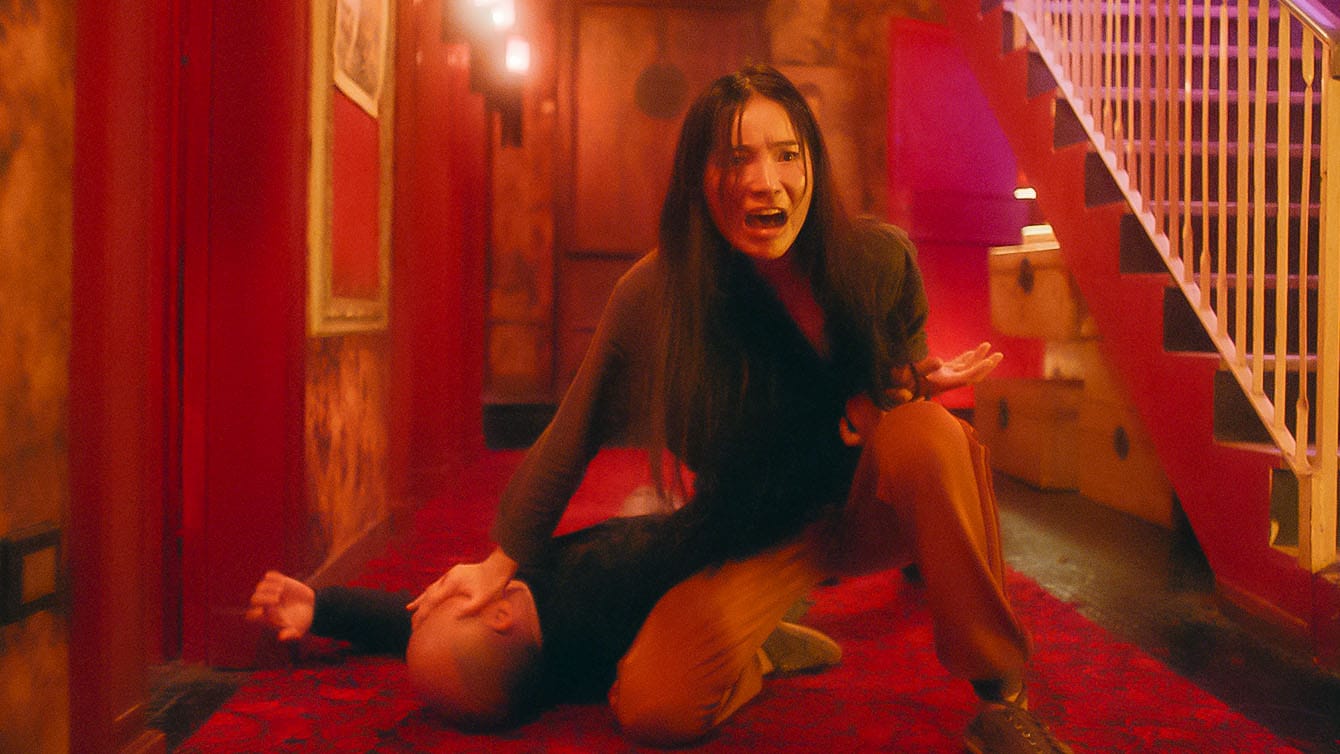
That woman is played by Liu Yaxi and she is incredible. A stuntwoman (she doubled Liu Yifei in the lead role in Disney’s live action Mulan) whose only previous acting credit is a small role in Chris Huo’s excellent 2024 iQIYI film Second Life, Liu tears through her fights scenes like a force of nature, ripping through gangsters (both Chinese and Italian) with all the creativity and quickness of the best contemporary action sequences. The film’s first major set piece, set in a large kitchen, is a masterpiece of the form, with Liu taking on a dozen or more bad guys while manipulating her environment with audacity and panache. Kitchens are a familiar setting for fight scenes, of course, but Mainetti and his stunt team manage to find new and clever things to do with it. Yang Liang is credited as the supervising stunt coordinator for what appears to be a largely Italian stunt crew. He’s got a long history of stunt credits, both as performer and choreographer on high-profile Hollywood productions, including franchises like Star Wars, Mission: Impossible and several Marvel movies (but not, perhaps notably, Shang-chi). Honestly I’ve trouble seeing anything in his filmography as creative as the fights in The Forbidden City. That may be because working on big studio projects, he was never allowed the latitude he found on this Italian production. Or it may be that he’s the responsible technician implementing some other person’s ideas for the fight, perhaps Mainetti himself. It’s impossible to say from the outside, but must instead remain a subject for further research.
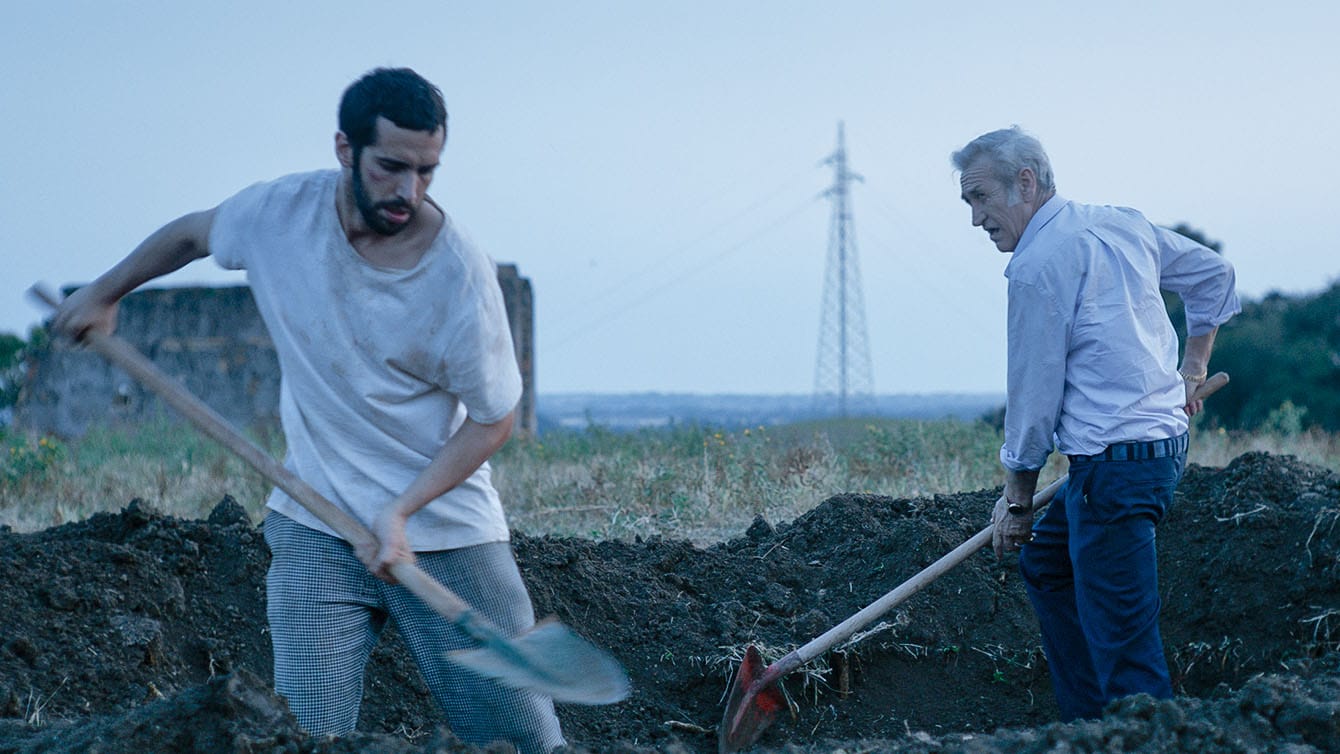
Anyway, Liu is in Rome searching for her sister and her story gets intertwined with that of the domestic melodrama around Borello and his restaurant. This leads to more fights, of course, but also a tentative romance mediated by GoogleTranslate between the two leads. But just as the opening kitchen fight overshadows all the fight sequences that come after it, so the revenge plot overshadows the domestic melodrama. This kind of movie, combining two totally-unrelated and indeed fundamentally opposed story types requires a delicate balance, one that Mainetti never really finds. I’m reminded of Godzilla Minus One, which blended neo-realist post-war melodrama with kaiju disaster horror, but much more effectively. That film found the connection between the two, with the monster as a manifestation of Japanese guilt and self-hatred after the war (though its proposal of a kind of enlightened nationalism as the solution is certainly problematic). The Forbidden City never really links its two story elements, beyond developing a sweet romance between two attractive and charismatic movie stars. But maybe that and a handful of great action scenes are enough to get us through the more conventional parts.
Speaking of Godzilla Minus One, last year I wrote about it in comparison of Shiraishi Kazuya’s 11 Rebels, a period samurai film about a small battle in a forgotten war where no side is either wholly good or bad, which no one really wanted to fight, and which our ostensible hero was always trying to run away from rather than stand and fight. 11 Rebels was one of three Shiraishi projects to release in 2024, the others being three episodes of a TV series (The Queen of Villains, which sounds like but is not a Raquel project and is instead a Netflix series about women’s professional wrestling in Japan) and Bushido, the latter of which is getting a somewhat belated release this month here in the US courtesy of Film Movement.
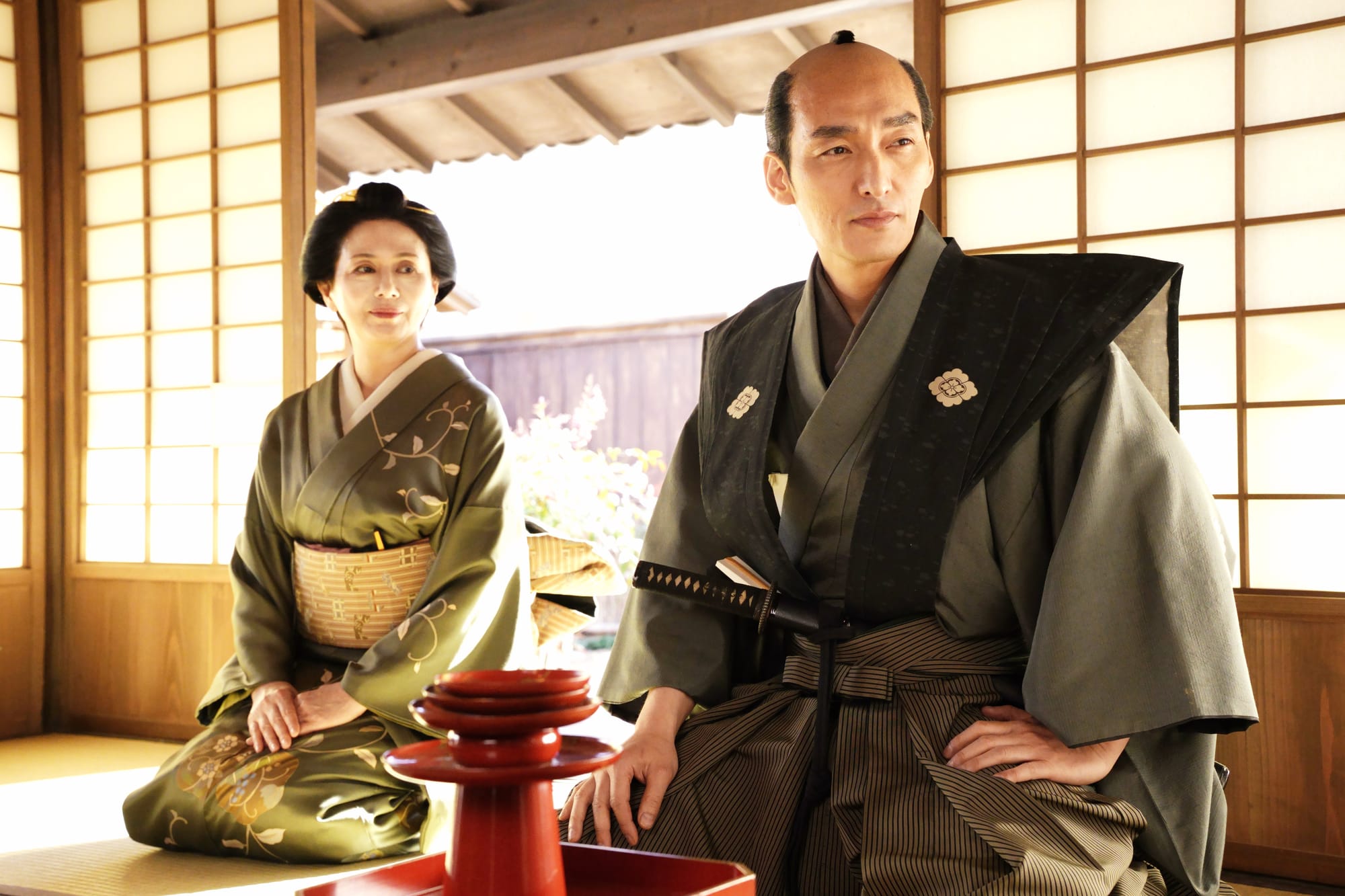
The name implies some good samurai action, but with an emphasis on the philosophy of life behind the warrior class, and that’s largely what we get. Kusanagi Tsuyoshi, who was excellent as the lead in last year’s Bullet Train Explosion, stars as a former samurai who now lives in a run-down area of Edo with his daughter. They have a quiet life where he plays Go and makes money working on art projects like restoring ancient seals and she sews. The setup could be an Ozu movie, and indeed there’s a subplot involving the daughter’s marriage prospects and her reluctance to leave her father alone. Their world is one of fine objects, blossoming cherry trees, and a quiet respectable life.
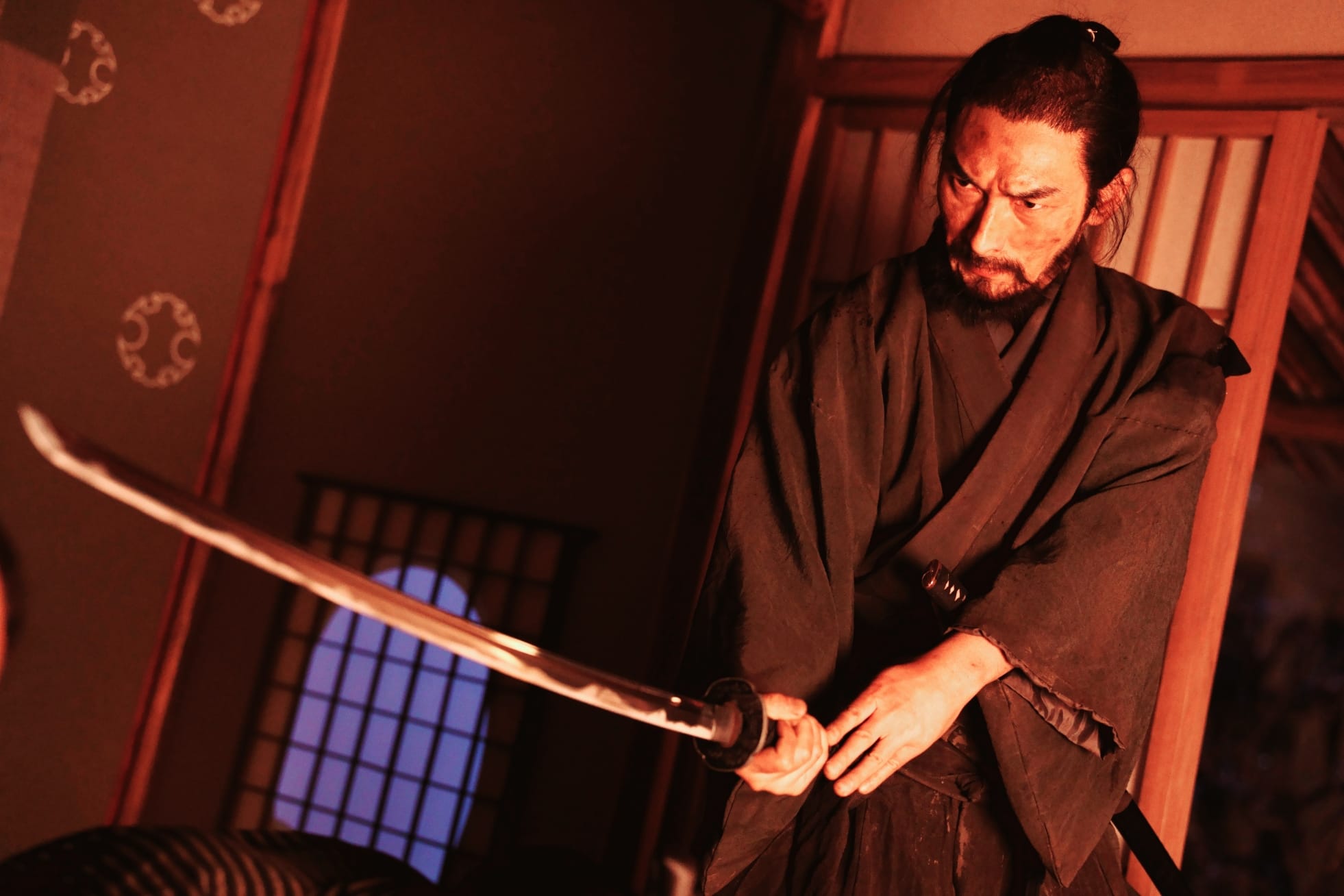
But, as always, and especially so where samurai are concerned, there’s darkness and violence under the peaceful facade. The girl’s friend and client is revealed to be the madam of a geisha house who has a runaway girl cruelly beaten and tortured. The father’s friend is a stingy pawnbroker, seemingly reformed by the samurai’s ideological and moral example in their endless Go matches. but when some money goes missing, the blame falls on the samurai and business as always is business. This conjures backstory, told in grainier, more saturated colors, about how the samurai lost his job with his lord: he was framed for robbery and had his wife raped (she later killed herself) by the sore loser of a Go match. Kusanagi, seemingly a peaceful and ordinary man, must then set out on a quest demanded by honor: kill his old enemy, clear his name, and do it all in time to rescue his daughter from the brothel. A handsome art house production about the game of Go as a philosophy of life becomes a desperate tale of revenge, Kusanagi himself become not the calm master of strategy and upright living, but a man hell-bent on revenge, walking the earth and growing a beard and looking and acting increasingly like Lee Van Cleef.
If the story seems slightly absurd, conflicts that could be resolved with simple conversations, the wild chance of the missing money, deadlines arbitrarily set and arbitrarily met or not, then is that a mark of substandard plotting, or merely the result of the absurdity of the samurai code, a system where the mere accusation of a crime, without any substantial evidence, is a capital offense, justifying murder, suicide or, as often as not, both. The savagery of this system is revealed in the chaos of the film’s few fight scenes, where Kusanagi only draws his sword as a last resort, and only after a whole lot of stumbling and falling, missed strokes and desperate screaming. Bushido is revealed to be a slightly absurd edifice propping up base motivations like revenge, greed, and lust.
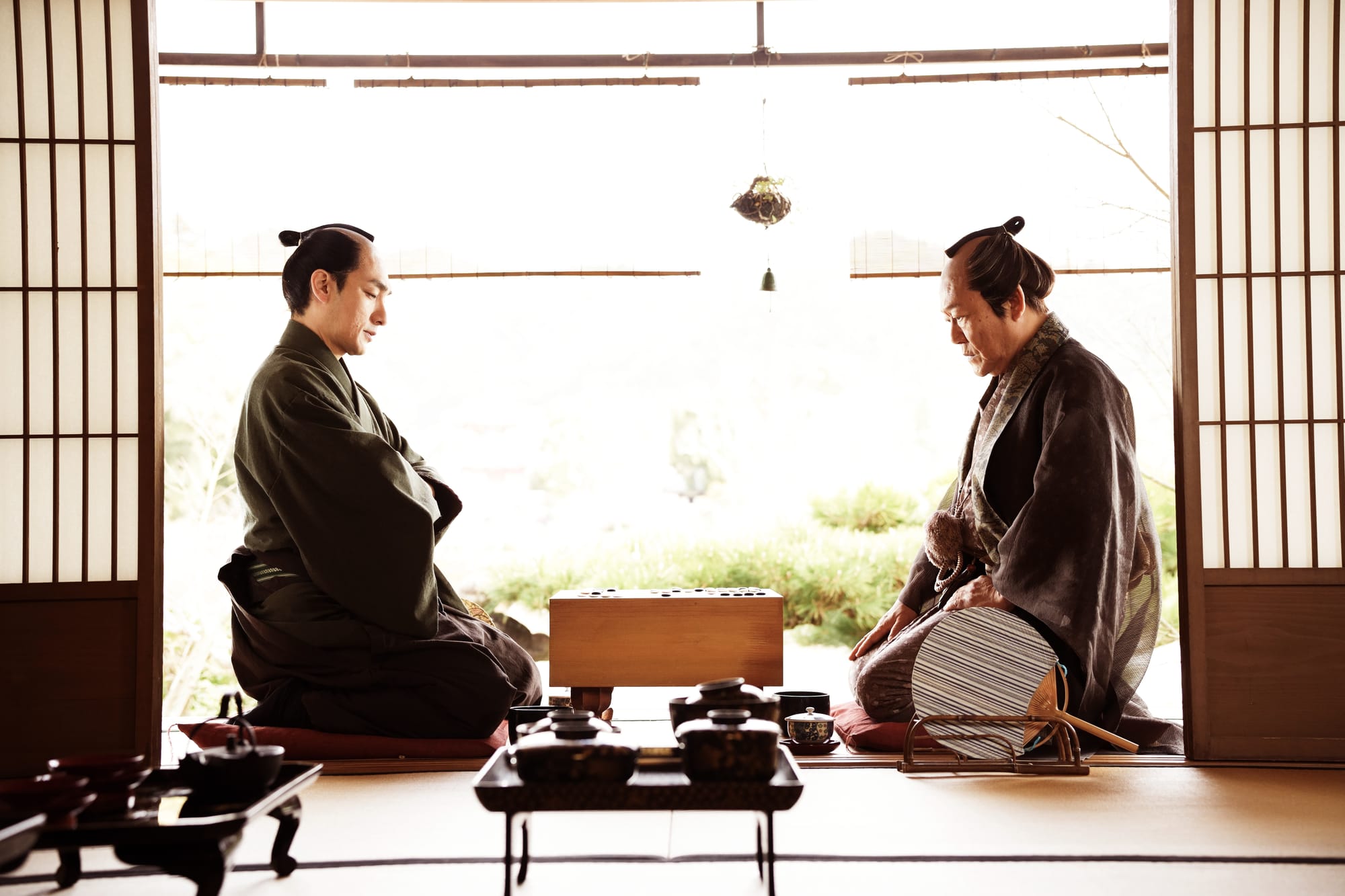
But Shiraishi is not simply interested in poking holes in the samurai myth—after all, 80 years after the war ended, there’s not a lot of new ground to stake out in that area. Because as silly as the plot might seem, and irrational as the code may be, the fact is that Kusanagi’s samurai fervently believes in it, and his embodiment of Bushido, of the samurai as poet-warrior as wise as he is deadly, is deeply attractive. So Shiraishi makes his world, populated not just with beautiful objects and the delicate sounds of spring air and Go tiles placed on finely-crafted boards, but rooms lit by candle and moonlight, gorgeous sunsets washing the world in yellows and pinks, greens and blues. Bushido is as gorgeous as the rules regimenting its society are cruel and onerous. Kusanagi the true believer almost sacrifices the one for the other, but in the end is saved by the most rational and humane of impulses: sometimes it’s OK to bend the rules just a little bit, ya nitwit.