IFFR 2026
Reviews from the 2026 edition of the Rotterdam International Film Festival

The following reviews appeared in somewhat different form as part of the IFFR coverage at InReview Online.
Lone Samurai (Josh Waller, 2025) - January 31, 2026
If you like Bone Tomahawk, Lucio Fulci’s Conquest, samurai poetry, and Yayan Ruhian being cool as hell, then folks have I got the movie for you. Lone Samurai dropped unceremoniously on VOD in the US last December, but it’s here at Rotterdam and with WellGo soon to be releasing it on home video, maybe it will find the cult audience it’s destined for, but then I thought the same about Marko Zaror’s similarly spiritual martial arts film Fist of the Condor, and that has seemingly yet to materialize. But we can always hope, I suppose.
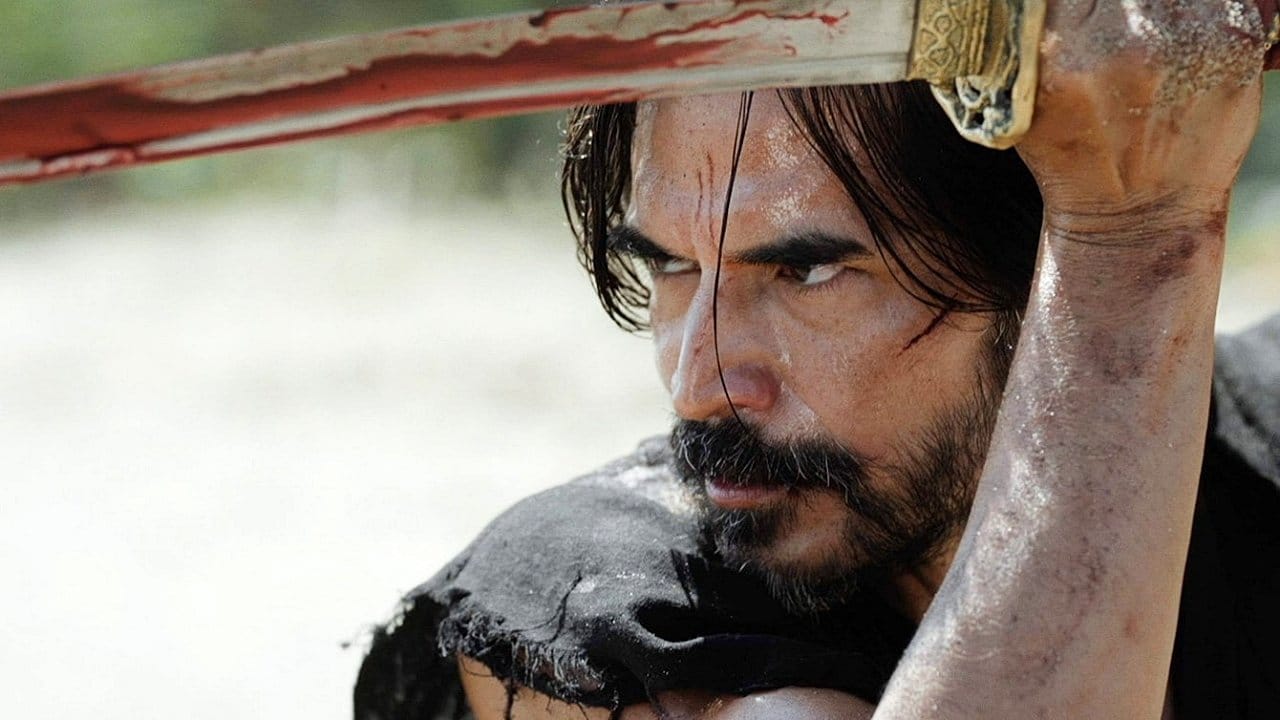
A prologue introduces us to an unnamed samurai who takes part in the second battle to stop the invading Mongol fleet in the 13th century, the one that, thanks to a timely storm that destroyed the Khan’s ships, gave rise to the concept of the kamikaze, or ‘divine wind’. A narrator that asserts that in addition to the wind, the Japanese also sent a select group of samurai onto the Mongol ships to kill everyone they found there. One of these samurai, played by Okinawan actor Shogen (star of Brillante Mendoza’s Gensan Punch) awakens on a deserted beach, with a piece of boat jammed in his thigh. The first third of the movie follows him as he hobbles around the beach, gathers various materials, writes some poetry, and has visions of his wife and children, all on his way to find a good spot to commit seppuku.
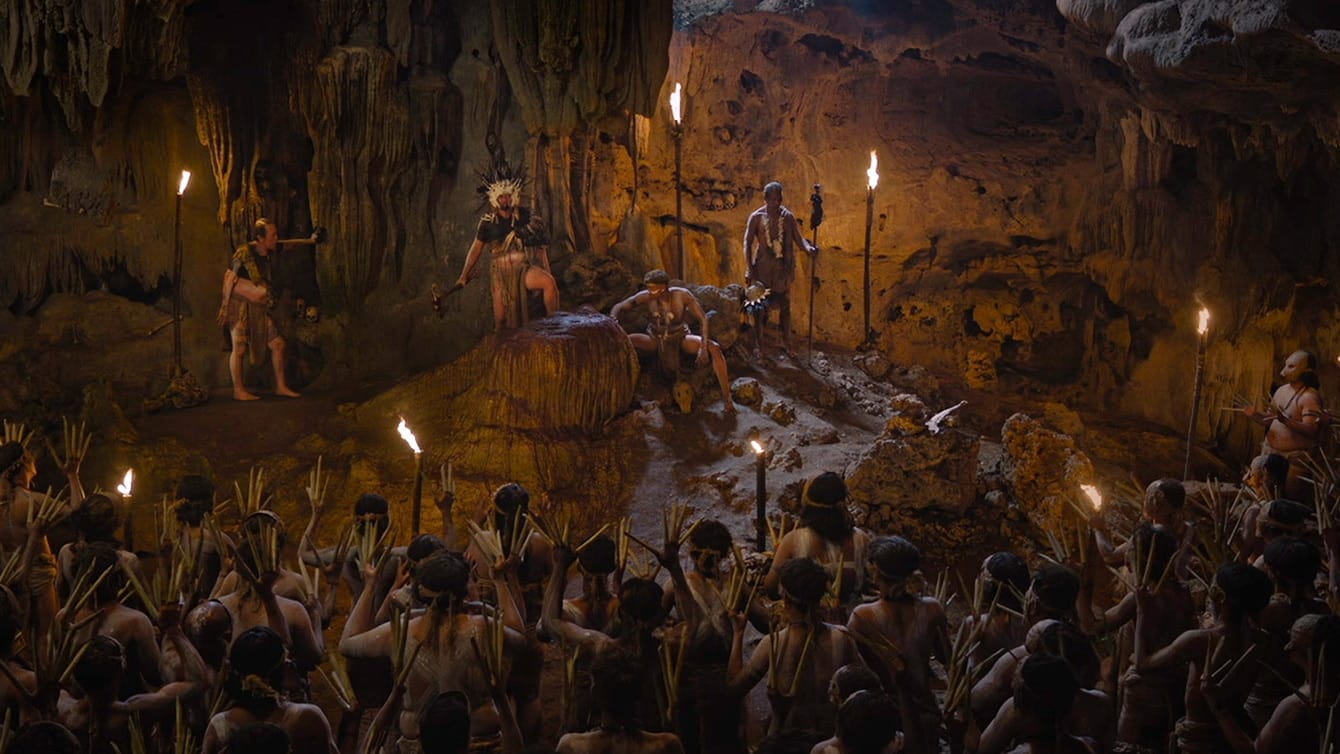
But just before he’s able to complete his mission, he’s suddenly captured by a tribe of cannibals. The second third of the film finds him trapped in a cave, drugged and witness to the horrors of human sacrifice. Indonesian martial arts legend Yayan Ruhian appears as a kind of shaman and Rama Ramadhan, a veteran stuntman from such films as The Night Comes for Us and The Raid: Redemption, plays the tribal leader. This third plays as a horror movie, the spiritual opposite of the movie’s beautiful opening section, locked in a torchlit cave whereas the first found us marveling at forests and waterfalls and sunsets. We see nature, and then we see what humanity has chosen instead.
The final third then follows the samurai’s escape and his methodical cutting down of his enemies. This is where almost all of the film’s action lies, and it’s up to the standards set by previous Indonesian gems featuring Ruhian and Iko Uwais (whose company was one of Lone Samurai’s producers). The action bears some resemblance to Crazy Samurai Musashi, in that it is basically just thirty minutes of one dude slicing up a near-endless supply of other dudes, but American director Josh Waller (more successful lately as a producer (Mandy, A Girl Walks Home Alone at Night) his last feature as a director was the 2015 Zoe Bell vehicle Camino) and the stunt team give it more variety in weapons and settings (watch out when the samurai gets both his swords back!) and it builds really well to the final two fights with Ruhian and Ramadhan, with different styles for the key opponents requiring Shogen to adapt. Shogen himself is a magnetic presence, carrying the film’s almost completely non-verbal opening third as well as the relentless action of the finale. His samurai is a poet-warrior in the classic sense, a fully-realized version of an idealized character.
In the end, Lone Samurai is everything one wants in a low budget genre film. It’s short, nasty, pretentious, and exhilarating.
Tunnels (Bùi Thạc Chuyên, 2025) - February 2, 2026
Tunnels: Sun in the Dark is a rarity in the West: a film about the Vietnam War told entirely from the perspective of the Viet Cong. Of course, it’s much less rare in Vietnam, but Vietnamese films almost never make it to our shores. And when they do, they usually star Veronica Ngo. Tunnels might be read as a propaganda movie, as it’s about the heroic resistance of the VC against the American invaders, and the longest speech in the film is a defiant one about how long the Vietnamese have struggled for freedom and how determined they are to fight and die for their cause. But if you’re sympathetic to their cause, or really just know anything at all about the Vietnam War, that’s not propaganda, that just spitting facts. On the contrary, a film like Tunnels lays bare exactly how almost every American film about the war is itself propaganda.
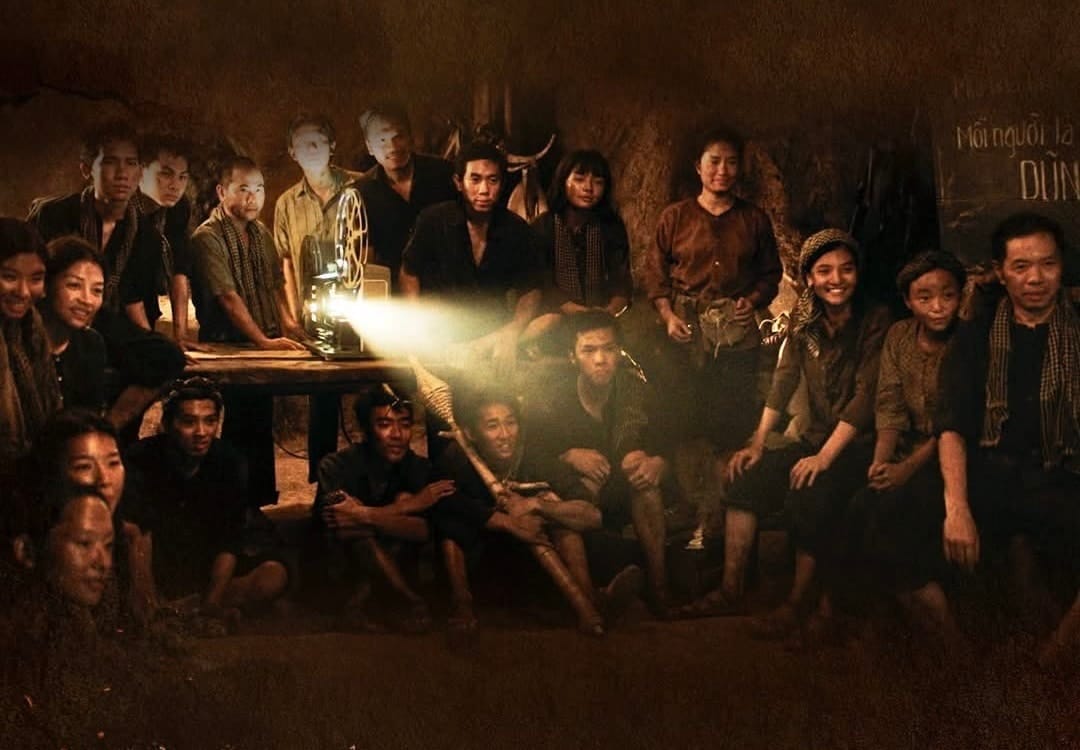
The plot is a simple, essentially a reverse angle view of Oliver Stone’s Platoon, which revolved around a lengthy American siege of a Vietnamese tunnel complex (with a detour into a My Lai-style massacre and lengthy meditations on whether Charlie Sheen should kill innocent unnamed civilians or Tom Berenger). We join a band of guerrillas as they occupy a large underground (literally) network. Their mission is to protect an intelligence communications center at the base of the tunnels, three stories down. The character types are familiar: the grizzled veteran leader in charge of too raw recruits, the man of mystery in charge of the intelligence unit, the hotheaded young soldier too smart for their own good (in this case a woman, all-too-rare in a Western war movie but not at all in a Communist one), the stranger who joins them who may or may not be a spy, and an array of other character types that would be just as familiar to the audiences of The Sands of Iwo Jima or They Were Expendable.
For the most part these characters and their stories are well-drawn though, confined as they are almost entirely to action rather than melodrama. There is a bizarre subplot about a sexual assault that doesn’t make any sense, as well as perhaps the most poorly-timed sex scene since Munich. But for the most part the film rolls along with classical precision: the first 45 minutes introducing the characters and the geography of their world, the last hour they’re increasing desperation as the Americans are closing in and the people we’ve come to know meet their fates. Director Bùi Thạc Chuyên has a careful eye for geography, laying out the complex and its environs enough that we always know exactly where we are when thing start getting blown to hell. And things do get bad: we get snipers and tanks and snakes and rocket launchers and floods and fire and all kinds of deadly mayhem. At times, the action even nods to something like the existential horror of the tunnels of Andrzej Wajda’s Kanal.
But Tunnels most resembles the war movies recently coming out of the PRC, films like The Battle at Lake Changjin, Snipers, The Eight Hundred, and many more that the Chinese regime feels are valorizing statements about the Party and its warriors and all of which are derided in the West as propaganda, works of concession by once great filmmakers (names like Tsui Hark and Zhang Yimou) to the power of the state. Most of the Chinese ones I’ve seen are more complicated than their reputations, however, presented a clear-eyed view of the cost of war, not just its honors and glories. The losses in Tunnels too are deeply felt, but there’s never any question that the individual sacrifices for the collective cause will ultimately be worth it. Tunnels concludes with newsreel and documentary footage of complexes like the one depicted in the film, along with comments from the men and women who served in them. It is unabashedly proud of the Viet Cong, but does that make it propaganda?
One of the interesting things about war movies is that while they’re one of the most popular genres of propaganda, movies that governments and cultures produce to instill nationalistic virtue in their citizens, the movies themselves are basically all the same. The only real difference is the ideology expressed in the speeches the characters say to each other (but really to the audience). But even then, if you move around a few words here or there (“imperialist”, “capitalist”, “communist”, “fascist”, etc), even those speeches are basically the same, hitting the same notes about, say, a small group of heroes standing together against a common foe, or the need to defend the homeland from the foreign invaders, or how war is hell and the bosses don’t care about the everyday soldier so the folks in the trenches have to just fight for each other.
Which is not to say that we shouldn’t ever call a particular war movie a work of propaganda. Rather, what we usually mean when we call a movie that is that the movie isn’t very good. Its exposition is clunky and preachy, or the film is racist in its depiction (or in some cases, complete erasure) of the enemy, or it isn’t sufficiently anti-war for our tastes. François Truffaut famously claimed that it was impossible to truly make an anti-war film because the cinema glamorizes everything it captures. Samuel Fuller, who should know, called Full Metal Jacket, a movie that most of us experience as a horrifying picture of both the military and the war, a recruiting poster. Relying on production money isn’t a reliable indicator of propaganda either: many countries subsidize their film industry’s with more or less supervision over the movies that get made. Some countries, like present day China, have strict, if ambiguous, rules about what can and cannot be depicted about the wars of the nation’s past. Others, like the US, are governed by corporate interests that are mostly aligned with the political power structure. In both cases, there are things one simply cannot do in a mainstream war picture. And in both cases, ingenious filmmakers always find ways to express meanings contrary to the system, while working within its rules. Tunnels is in no way contrary to the system, but it’s still a damn good war movie.
Fish, Fists, and Ambergris (Dương Minh Chiến, 2025) - February 3, 2026
As the Hong Kong film industry has been devoured by Mainland China, drawing its stars and directors away with the promise of big budgets and even bigger audiences, a vacuum has formed in the action genre. Audiences around the world need to see stuntmen recklessly risk their bodies and lives for the sake of cheap thrills, and if Hong Kong isn’t going to provide that anymore, then we’re just going to have to go elsewhere to look for it. The 2000s saw the emergence of a Thai industry centered around Tony Jaa (Ong-Bak, The Protector), while a few years later cottage industries sprung up in Indonesia around Iko Uwais, Yayan Ruhian and Timo Tjahjanto (The Raid, The Night Comes for Us, The Shadow Strays) and Vietnam around Johnny Tri Nguyen and Veronica Ngo (Clash, The Rebel). These Southeast Asian action films revolved around remarkable stunt-work propping up familiar genre formulas, as opposed to bigger industries like Korea and India, which incorporated the flashier elements of Hong Kong style into their more established cinematic formulae and traditions.
Over the last 15 years, most of those new stars were scooped up by Hollywood or other industries: Tony Jaa’s best recent work has come in Hong Kong, Uwais, Ruhian, and Ngo appeared in Star Wars movies. Tjahjanto’s last film was the Bob Odenkirk fight film Nobody 2. Le Van Kiet, who directed Ngo in Furie, made The Princess, starring Joey King, for Hulu, while Johnny Tri Nguyen hasn’t appeared in a film since Spike Lee’s Da 5 Bloods, back in 2020 (which also featured Ngo). But the industries keep rolling, even without that initial wave of stars. Just at this year’s iteration of IFRR, we’ve seen the Indonesian/Japanese hybrid Lone Samurai and the Vietnamese war film Tunnels, two of the better action films of the past year and well-deserving a wider audience in the US. Fish, Fists, and Ambergris joins them as an action-comedy in the Hong Kong style, with a distinctly handmade flavor.
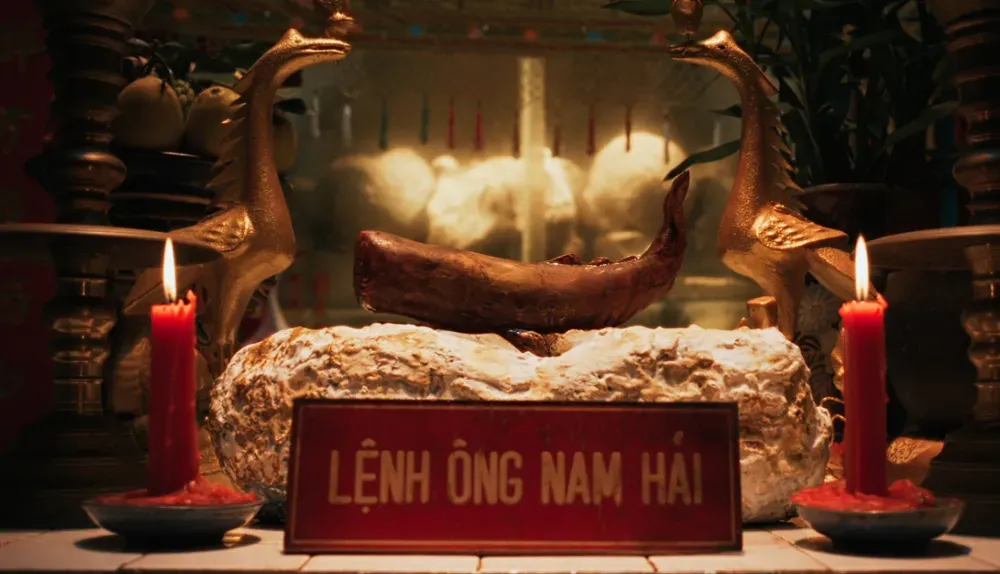
Directed by Dương Minh Chiến, Fish/Fists appears to be the debut feature of a collective of stunt performers. It concerns a small fishing village in the south of Vietnam and their statue of a whale. The whale is made of ambergris and is thought to bring luck to the villagers. Its shrine is guarded by a martial artist named Tam, played by Quang Tuấn, who also starred as the mysterious mechanic obsessed with making things explode in Tunnels. One day his younger brother, back from Saigon for a visit, steals the idol and takes it to town to pay off his gambling debts. Tam and his friend Hoang (Hoàng Tóc Dài, one of the three credited choreographers on the film, billed as “Action 3”) head into the city to get it back. There they meet a former villager turned fish saleswoman (Nguyên Thảo), and the three of them spend the rest of the film brawling with gangsters and trying to reform the prodigal brother and bring him and the idol home.
A simple plot with plenty of goofy humor, the film is bright and colorful, even in its night scenes. It feels more like a classic HK Lunar New Year action-comedy than any movie I’ve yet seen out of Southeast Asia, where the jokes are silly, the sound effects cartoonishly goofy, and the fights as spectacular as they are almost entirely bloodless. The fights are for the most part variations on the one or two men against an army of gangsters armed with knives and lead pipes, and the stunt crew is creative enough that the fights never feels repetitive, instead incorporating the environments (a couple of big warehouses filled with junk, but also a beach, a fish market, and a motorbike chase down narrow streets) into the choreography in unexpected ways and the crew keep the action legible at all times. The group brawls are fast and complex, incorporating a variety of martial arts styles in an agreeably hybrid version of chaotic street fighting, with a ton of extremely painful looking stunts (as the credit sequence blooper reel attests). It’s no surprise the film was a big hit in Vietnam, nor that a distributor was daring enough to release it in North American theatres following its IFFR run.

Under Current (Alan Mak, 2025) - February 4, 2026
There’s no one out there making them quite like Alan Mak, for better or worse. One third of the team behind the Infernal Affairs series, along with co-writer Felix Chong and director Andrew Lau, Mak has spent the past 20 years crafting glossy thrillers about expensive men in expensive suits creating complicated schemes to rob each other in expensive rooms. He’d be the foremost chronicler of 21st century Hong Kong’s conspicuous consumption if we wasn’t also the foremost example of it. Movies like the Overheard series (2009-2014), Integrity (2019), and now Under Current feature an all-star cast of aging celebrities going through the convoluted motions of a screenplay built around needless complications and flash that in the end leaves you wondering what, if anything, it was all about. More often than not, it turns out to be about nothing at all.
Aaron Kwok plays a defense attorney who, after a crisis of conscience, begins investigating the suicide of a non-profit CFO played by Simon Yam. Yam it seems has uncovered some kind of embezzlement or money laundering that someone has been using the NGO for. Francis Ng plays the cop who helps Kwok out (it’s a mostly straight performance by Ng, though Hong Kong’s most reliably weird actor does get some moments to shine in his own inimitable way). Alex Fong plays Yam’s boss, while David Chiang plays Kwok’s. The Chiang and Fong combination is of course a reunion of the male stars of Teresa Woo’s Iron Angels, but I doubt that’s what Mak was going for. Instead they’re old guys meant to evoke the generation that preceded the Handover, while Kwok and Ng are the stars who came up during the transition from colony to SAR (and beyond). Felix Lok plays the shadowy villain. He’s been around forever too, one of his first film roles being in Yim Ho’s New Wave classic The Happening. None of the male stars are less than 60 years old. All of the women are though.
The screenplay is constructed haphazardly around flashbacks to Yam’s final months as Kwok’s investigation proceeds. It’s kind of fascinating how all the characters know what’s really going on (money is being stolen) but no one knows by whom or for what purpose. Except for us, halfway through, when that ancient Hong Kong bugaboo the Golden Triangle is invoked and the whole thing turns out to be an overly complex drug deal. Or rather, it’s a really simple drug deal that Mak has devised the most convoluted ways possible to show to us. If you like to see a screenwriter working real hard, then Mak is the guy for you.
This still being Hong Kong, Mak does give us a couple of fight scenes, one in the middle and one at the end. Neither is especially remarkable, though it must be said that the special effects in the finale are truly terrible, even by Hong Kong standards, though the taekwondo showdown immediately preceding it is pretty solid. All the money on screen must have been spent on the lens flare budget instead. In the end, the film asks the question: what are non-profits really for anyway? If it’s so easy to laundry drug money through them, then are they worth it? Left unsaid, but strongly implied, is that maybe these functions are better left to the government. Perhaps that friendly one that strongly believes in law and order and censoring motion pictures?