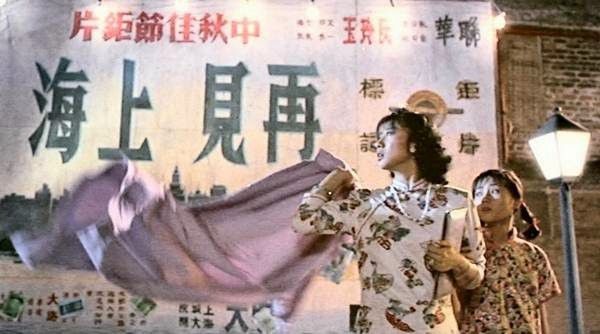
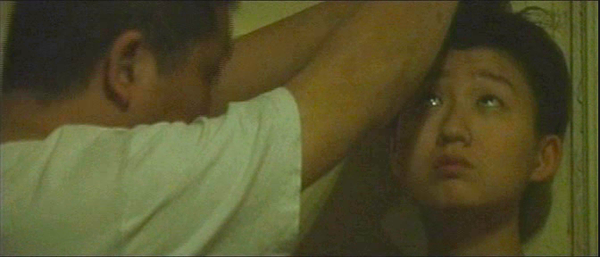
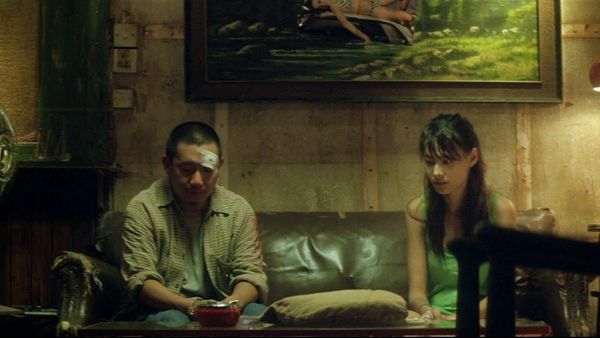
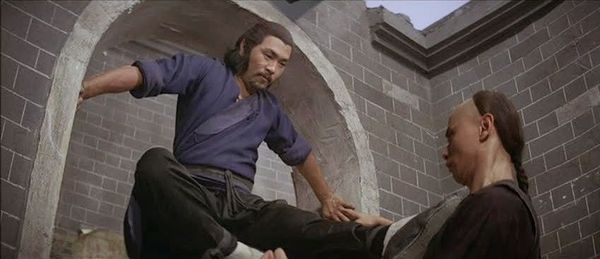
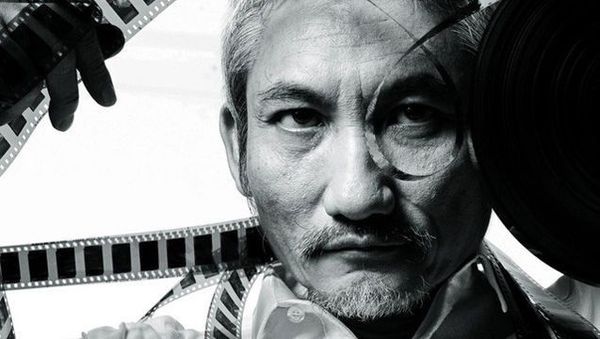
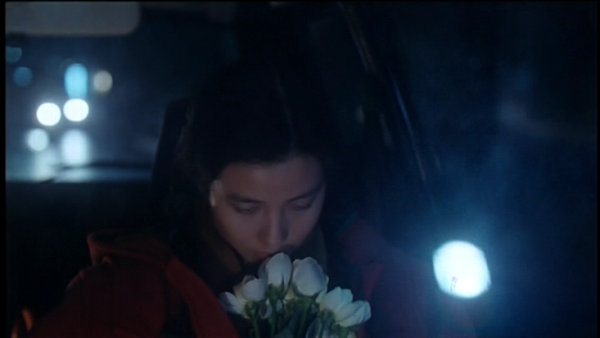
Tsui Hark Shanghai Blues (Tsui Hark, 1984) In his essential book Planet Hong Kong [http://www.davidbordwell.net/books/planethongkong.php], David Bordwell examines a sequence in the 1986 film Peking Opera Blues where director Tsui Hark deftly coordinates the movements of his actors as they try to remain hidden from an inquisitive father (three of them,
King Hu Legend of the Mountain (King Hu, 1979) It starts with a Wagnerian incantation: elemental imagery calling forth the natural world, music rising with the sun, the mountain, the clouds and the river, always the river, rushing, falling, churning. A Touch of Zen begins much the same way, but this world is depopulated, not even a spider mars
Liu Jiayin Oxhide (Liu Jiayin, 2005) Liu Jiayin’s Oxhide II was my favorite film at the 2009 Vancouver Film Festival. It was one of those marvelous festival-going experiences where you don’t know anything about what movie you’re going to see, and it turns out to be something wondrous, in this case a
Sandra Ng Golden Chicken 2 (Samson Chiu, 2003) The first Golden Chicken filtered 30 years of Hong Kong history through the life of one ridiculous prostitute and dared you not to be moved by her. Samson Chiu’s sequel, released one year later, tries the same trick, but with 30 years of Hong Kong cinema instead, most specifically
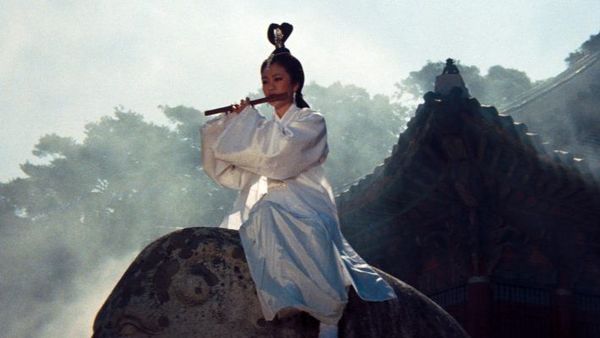
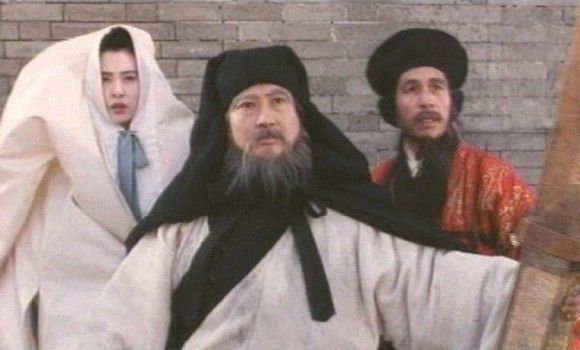
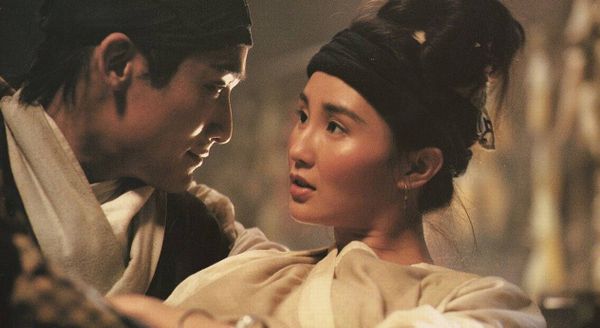
King Hu Painted Skin (King Hu, 1993) King Hu’s final film, it is, like his greatest work (A Touch of Zen) and his first film as an assistant director (The Enchanting Shadow), an adaptation of a story from the 18th Century collection of folk and supernatural tales Strange Stories from a Chinese Studio by Pu Songling.
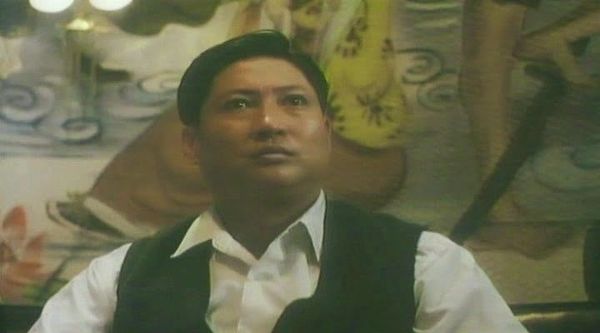
Mabel Cheung & Alex Law Painted Faces (Alex Law, 1988) A lovely account of youth spent in the China Drama Academy Peking Opera school, based on the experiences of Sammo Hung, Jackie Chan, Yuen Biao, Corey Yuen, and the other members of the Seven Little Fortunes performing troupe that grew up to dominate Hong Kong Cinema from the late 70s
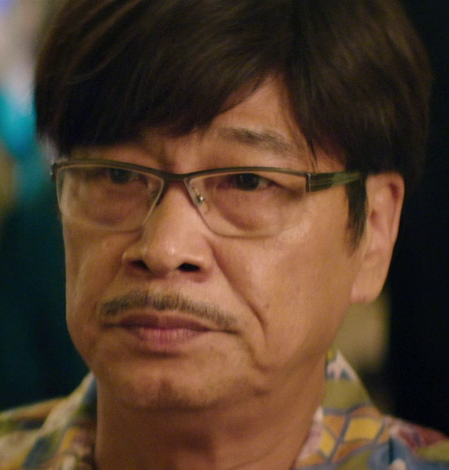
Pang Ho-cheung Isabella (Pang Ho-cheung, 2006) First things first: Anthony Wong is in this movie. He is in three scenes and he is eating in every one of them. It’s set in Macau and was released in 2006. I’m pretty sure he filmed his scenes on his lunch breaks during the making of Exiled
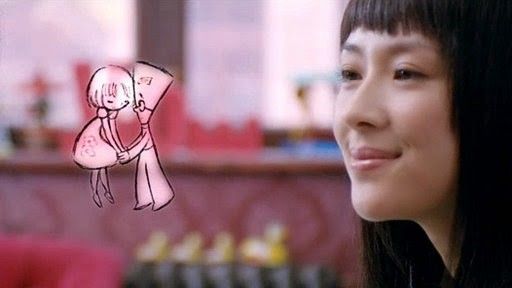
Zhang Ziyi Sophie’s Revenge (Eva Jin, 2009) Zhang Ziyi is the manic pixie at the center of a swirl of CGI whimsy in this romantic comedy, which is weird because while she’s no doubt a terrific actress, she’d previously shown no aptitude whatsoever for comedy. She fares OK all things considered, showing an admirable willingness
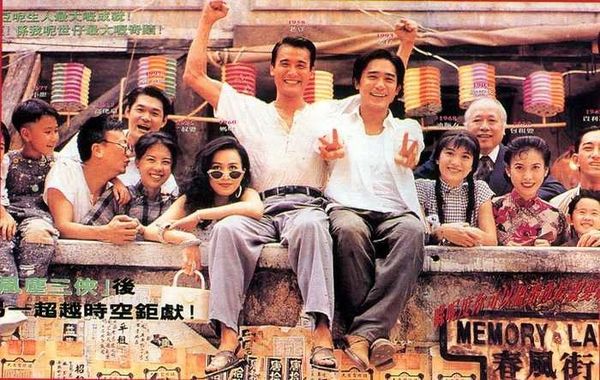
Peter Chan He Ain’t Heavy, He’s My Father (Peter Chan, 1993) Peter Chan Ho-sun’s 1993 comedy is a variation on Back to the Future, with Tony Leung (Chiu-wai) sent back 30 years to see what his father, Tony Leung (Ka-fai), was like when he was young, though it presents a very different take on the past and
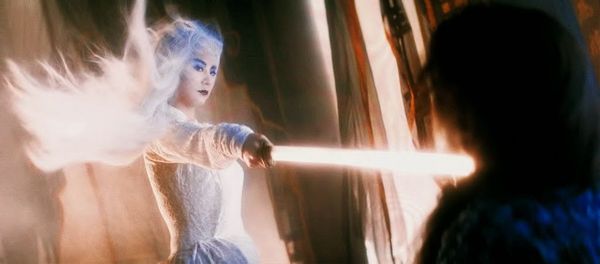
Ronny Yu The Bride with White Hair (Ronny Yu, 1993) All the same comic book mythology elements as so many other post-Zu: Warriors from the Magic Mountain wuxia films, A Chinese Ghost Story, Swordsman II, and Ashes of Time in particular, but director Ronny Yu slows the pace down, both in plot and editing, which allows more time to
Lau Kar-leung Martial Club (Lau Kar-leung, 1981) In the prologue to this 1981 film, Lau Kar-leung himself comes on stage to tell us about some of the unwritten rules of lion-dancing, the ways one dancer can offend another and thus incite a brawl (blinking your eyes, lifting a leg, sniffing the other lion’s butt)
The 36th Chamber Tsui Hark Tsui Hark Reviews: The Butterfly Murders (Tsui Hark, 1979) — May 31, 2013 All the Wrong Clues (...for the Right Solution) (Tsui Hark, 1981) – June 5, 2025 Shanghai Blues (Tsui Hark, 1984) — Aug 28, 2014 Working Class (Tsui Hark, 1985) — Dec 07, 2013 Peking Opera Blues (Tsui Hark, 1986) — Nov 22,
Chang Cheh The Assassin (Chang Cheh, 1967) Jimmy Wang Yu starred in five films in 1967, three directed by Chang Cheh. The One-Armed Swordsman of course is a masterpiece and while this one doesn’t have that film’s wild emotional heights or studio-wrought beauty, it does represent a foundation for a couple of major
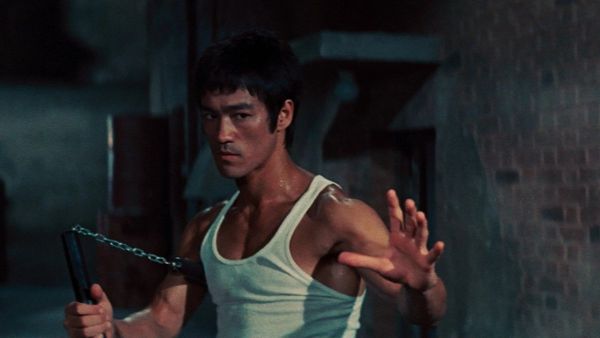
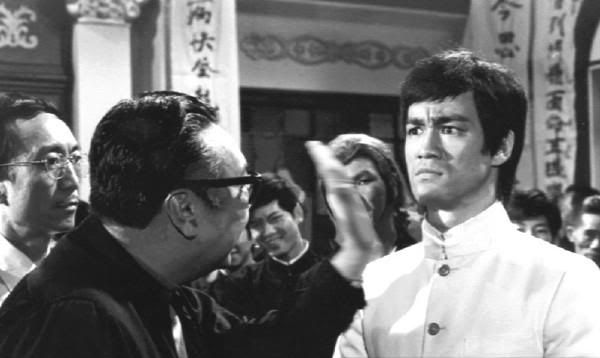
Bruce Lee The Way of the Dragon (Bruce Lee, 1972) Much more satisfying than Lee’s previous two films, The Big Boss and Fist of Fury. The plot is still deathly simple: Lee is sent by his uncle to Rome to defend a Chinese restaurant against a gang of thugs trying to force a sale. But Lee, this time serving
It's a Drink, It's a Bomb Lo Wei Capsule Reviews Brothers Five (1970) — December 3, 2010 Cheng Pei-pei (Come Drink With Me, Crouching Tiger, Hidden Dragon) plays the daughter of a kung fu master who has sworn to reunite the separated children of the title so they can take revenge on the villain who killed their father and whose
Stephen Fung Tai Chi Zero and Tai Chi Hero (Stephen Fung, 2012) It hooked me from the prologue, flashing back in time to the birth of the main character (not yet the “hero”) Lu Chen. Told silent-movie style, it rushes through the early stages of his life with a mix of narration and captions and title cards at breakneck pace, which
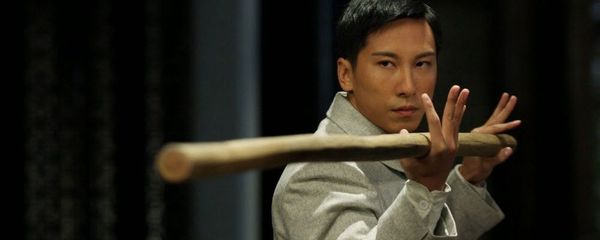
Herman Yau Ip Man: The Final Fight (Herman Yau, 2013) If Herman Yau’s first Ip Man film distinguished itself from the other recent movies about the man by focusing intensely on the intricacies of the Wing Chun style, this one does so in the detail historical backdrop it creates for its main character. The opening shot, a long digital
Chang Cheh Ten Tigers of Kwangtung (Chang Cheh, 1980) Well, there’s actually 15, if you count the five descendants of the Ten Tigers. Which could make this a bit confusing, but Chang Cheh gives us some friendly faces and nicely spaced exposition to emphasize that this is actually a very simple story. In the present, a guy and
Chang Cheh The Duel (Chang Cheh, 1971) Every time someone talks about David Chiang in The Duel (aka The Duel of the Iron Fist), they use his full name: Jiang Nan, “The Rambler”. The film’s other star, Ti Lung (paired with Chiang again and again through the early 1970s) finds himself caught up in an overly
Herman Yau The Legend is Born: Ip Man (Herman Yau, 2010) Oh yeah, another movie about Ip Man. This one covers his early years, growing up in a kung fu school, his first romance, years in college, and such. The emphasis, more than in any of the others, is on the specifics of the Wing Chun technique itself, with a whole
Peter Chan Wuxia (Peter Chan, 2011) Known in the US as Dragon, the actual title of Peter Chan’s 2011 film is Wuxia, the name of a genre of both film and literature, a word that is a compound of “wu” (military) and “xia” (chivalry, more or less). Wuxia stories are stories of warrior heroes, knights-
Tsui Hark New Dragon Gate Inn (Raymond Lee, 1992) This was nominally directed by Raymond Lee, a cog in the Film Workshop machine, working as a planner or nominal director for several Tsui Hark and/or Ching Siu-tung projects. Tsui was pumping out movies like a madman in the early 90s, with 18 producer credits between 1990’s
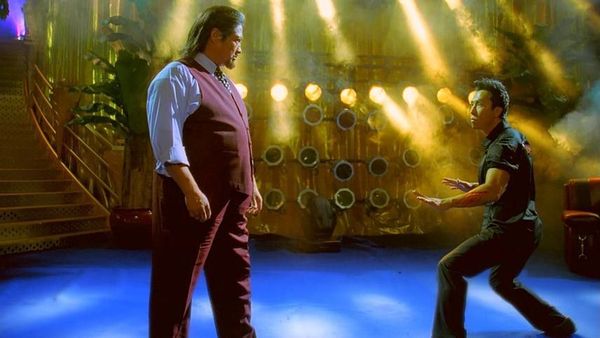
Wilson Yip SPL: Sha Po Lang (Wilson Yip, 2005) A rote cop/Triad story somewhat elevated by a serious commitment to operatic melodrama on the part of director Wilson Yip and composer Chan Kwong-wing. Sammo Hung is the gangster, Simon Yam the veteran cop willing to break all the rules to capture him. Donnie Yen is the new
Ann Hui Zodiac Killers (Ann Hui, 1991) A somewhat misleading title, as the movie doesn’t have anything to do with a Zodiac, or really even any Killers. Instead this 1991 film is a portrait of Chinese students in Tokyo leading desperately miserable lives. Directed by the great New Wave filmmaker Ann Hui, it was apparently [http:
John Woo Red Cliff (John Woo, 2009) Five years after his last American film, 2003’s Philip K. Dick adaptation Paycheck, and a long, troubled and expensive shoot plagued by last minute casting changes, John Woo finally released the first half of his epic two-part film Red Cliff. It proved to be a critical and commercial